


Gold Coast and the Tweed
Tree health on the Gold Coast
A tree that is thinning, dropping limbs or showing fungus at the base is looked at properly before anyone decides it has to go.
Tree health
What usually ails a tree
Most sick trees show it in the canopy first, but the cause is often lower down: in the roots, the soil or the trunk.
Root rot
Phytophthora lives in soil and attacks roots, and a plant can carry it for years before it shows. Above ground it looks like wilting leaves and shoots that blacken and die. It travels in soil and water, so tools and boots are cleaned between sites.
Myrtle rust
A fungus on the myrtle family, which takes in many natives: eucalypts, lilly pillies, bottlebrush and tea tree. Yellow powdery spores on soft new growth are the giveaway, and it is now established along the east coast.
Termites in the trunk
Some termites nest inside living trees and work through the timber from within, so a tree can look healthy while losing its strength. Sounding the trunk and a close look at the base find what the canopy does not show.
Decay and fungi
Mushrooms or brackets at the base or on the trunk usually mean decay inside. Not every fungus means the tree has to go, but every one is worth a look, because hidden decay is how sound looking trees fail.
Compared: removal, lopping or pruning, stump grinding or stump removal, council tree rules compared
How it works
Four steps, and the permit comes before the price
Nothing happens without a written quote you have agreed to.
- 1
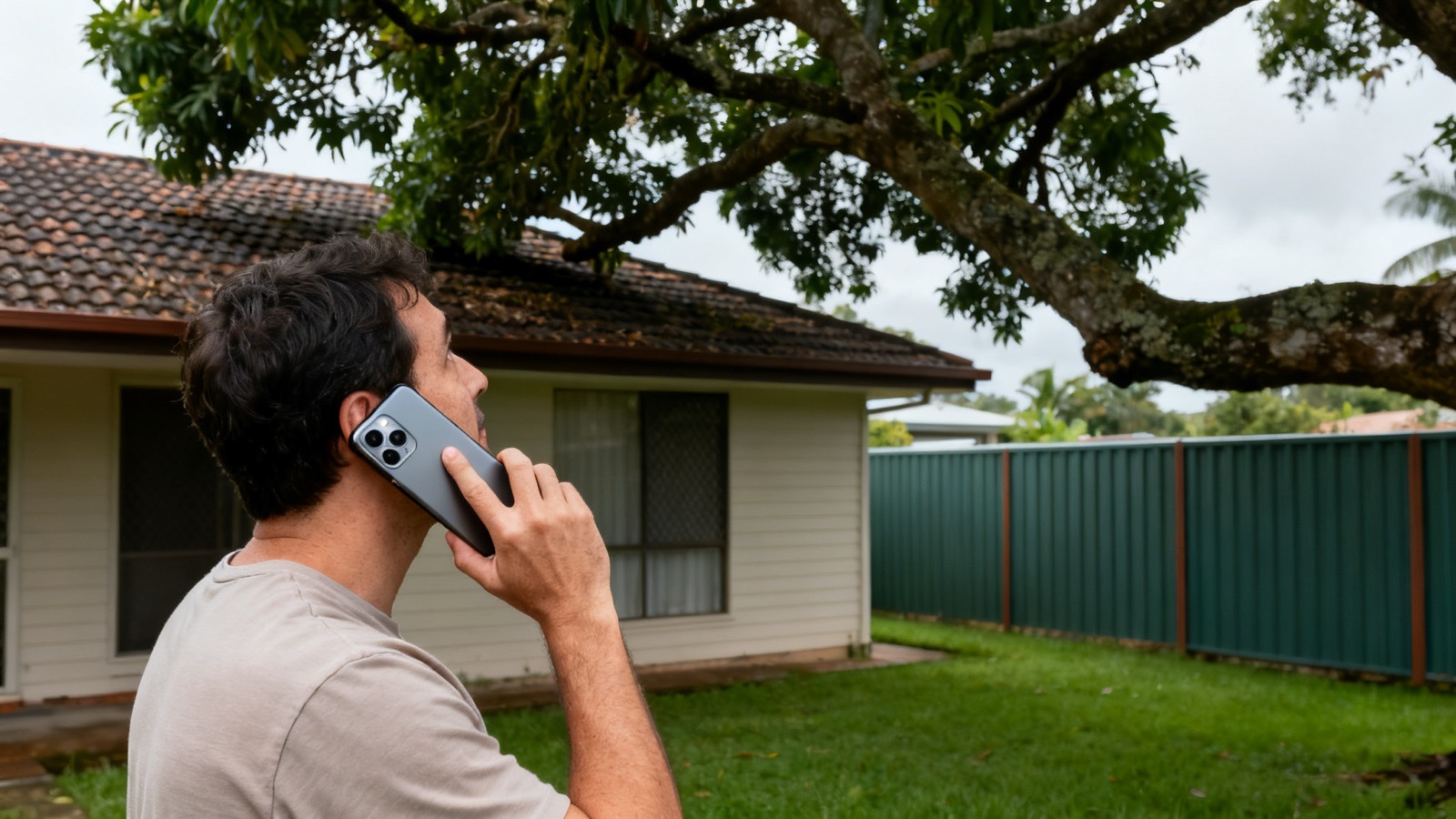
Call or send the form
Include the suburb, your details and what needs to be done.
- 2
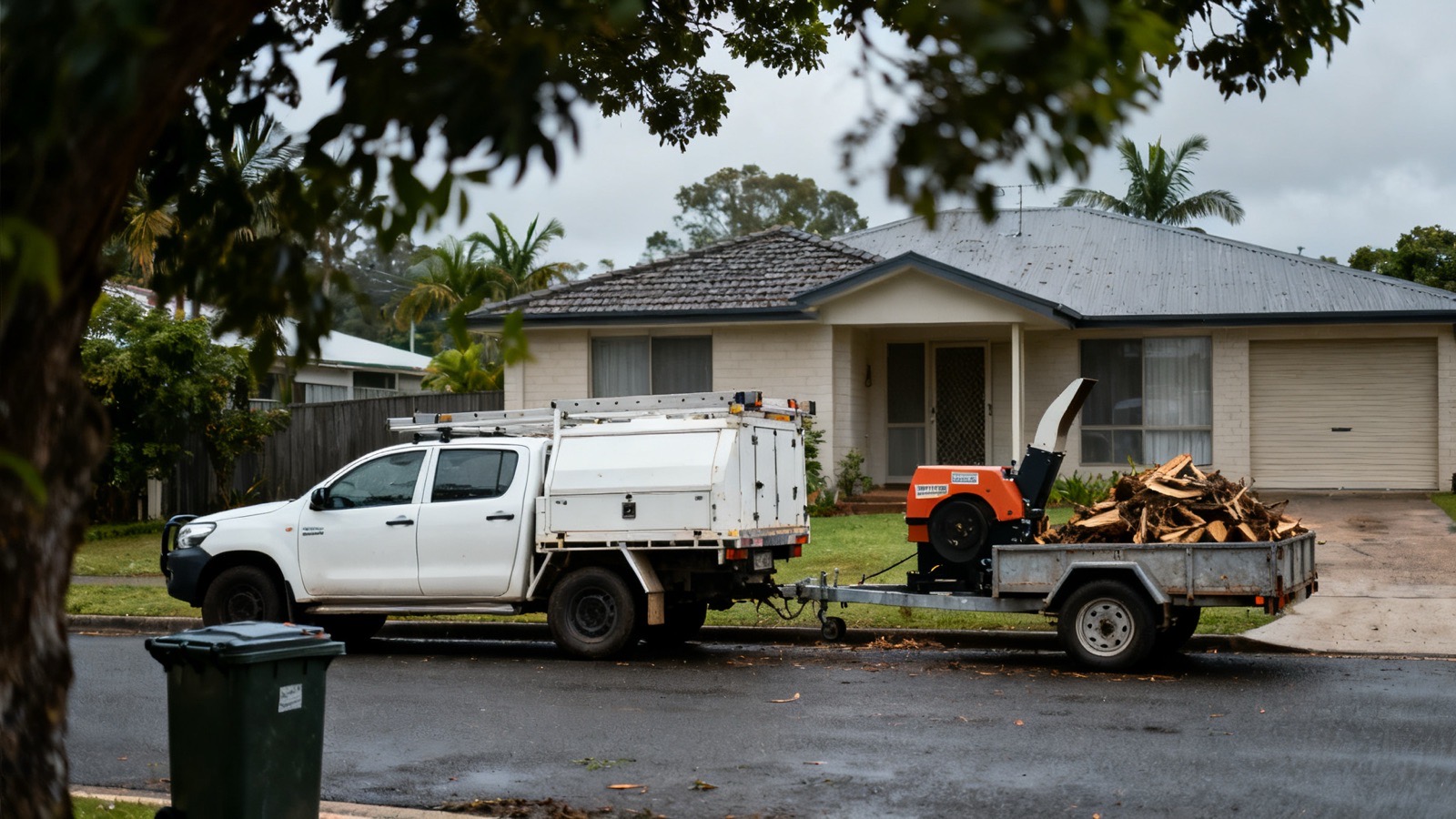
A contractor comes to see it
On site, not off a photo, because access and what sits underneath change the job.
- 3
The permit position is checked
Against the city's vegetation mapping and the koala controls, before a price is given.

- 4
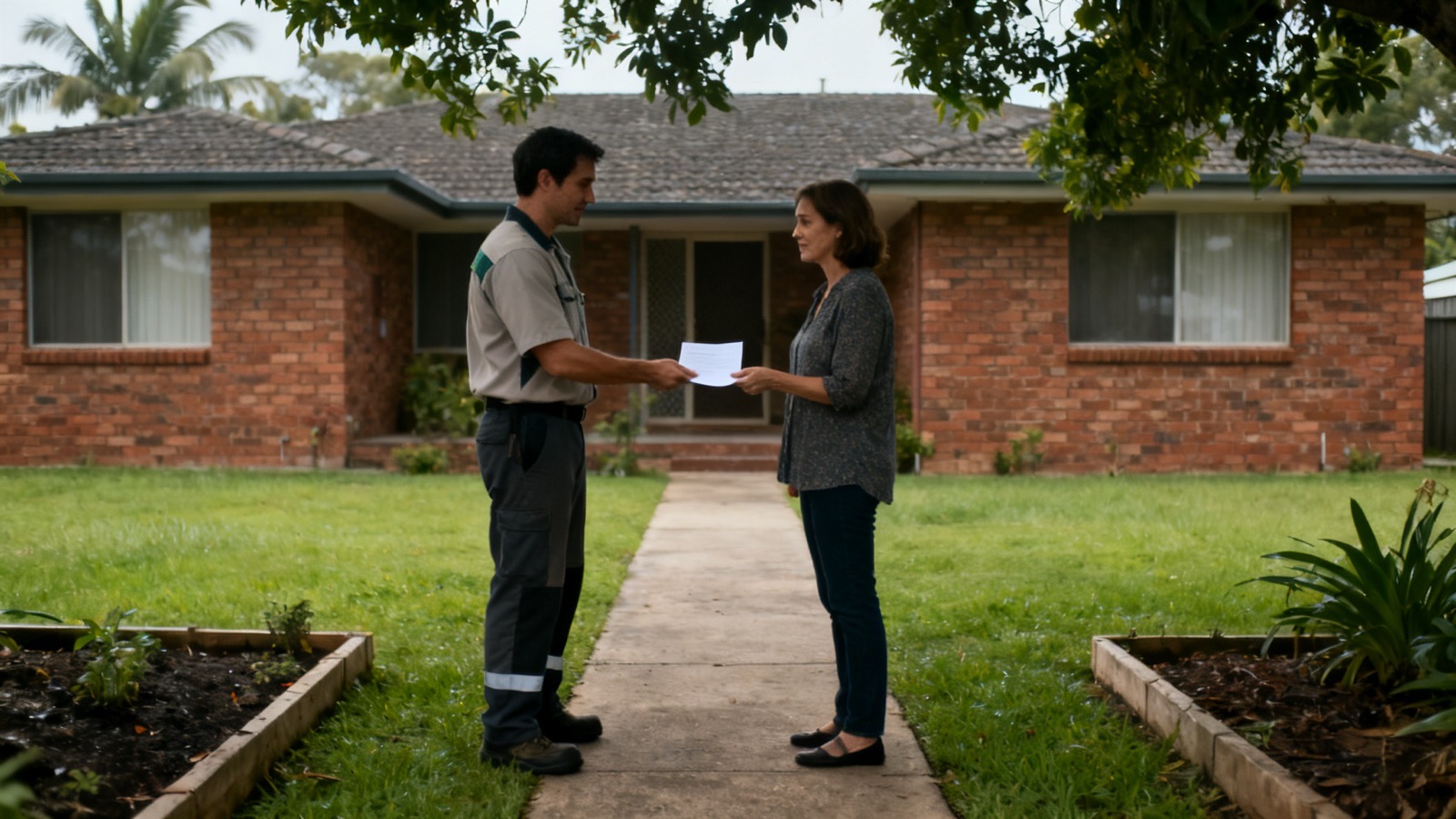
Quoted in writing
The quote sets out the scope, the timber, the stump and the date. Then a date is booked.



Tree health questions
Saving it, treating it, or taking it out
Can a sick tree be saved?
Often, if the cause is found while there is still enough healthy wood and root. Deadwood out, the load reduced, drainage or compaction fixed, a pest or disease managed. Sometimes the honest answer is that the tree is past it, and the visit says that too.
What does a tree health check involve?
A look at the whole tree from the root zone up: soil, base, trunk, crown and the pattern of any dieback, plus what has changed around it, such as new paving or a change in drainage. The quote then sets out the work, whether that is pruning, treatment or removal.
Is myrtle rust a reason to remove a tree?
Not on its own. Many trees live with it, though it can kill new growth and hit some species hard. What matters is how much of the tree it has taken and whether the tree has the reserves to recover.
Does a dead or dying tree still need council approval to remove?
It can. The City exempts a dangerous tree only once a Level 5 arborist authorised by the council has found it dead, dying, diseased or structurally unsound. Until then the usual rules apply, and the tree removal permits page sets them out.
